 EN
EN EN
EN


Varicose veins are enlarged, twisted veins that can cause discomfort and pain that may disrupt daily life. There are so many ways to effectively treat vein problems and one of the newest and most exciting is Venaseal.
The VenaSeal procedure can deliver effective, fast, and long-lasting relief from varicose veins. This procedure is minimally invasive, requires hardly any recovery time, and offers a more comfortable experience than some other treatments. VenaSeal involves a small amount of medical adhesive to act as a vein glue. Treatment reroutes blood to healthy veins, offering relief from the pressure build-up that occurs in weakened veins.
Keep reading to discover everything you need to know about this treatment, including how it works, the pros and cons, and several frequently asked questions about the procedure.
VenaSeal is a non-thermal, minimally-invasive treatment for varicose veins that closes or seals the damaged veins to help relieve pain. This varicose vein glue treatment holds the vein’s walls together and redirects blood flow to healthy veins nearby. As time passes, the body absorbs the inactive veins until they disappear.
When vein walls and valves weaken, blood begins to pool into the veins, rather than following the standard path and going from the legs to the heart. This pooling stretches the veins and can result in twisted, achy, and bulging varicose veins that can impact everyday activities. VenaSeal addresses these concerns.
While other treatments require removal of these veins or require thermal heat delivery to cauterize, this treatment offers a more comfortable experience. A local anesthetic and one needle prick are all a provider needs to access the vein with a catheter. The lack of lasers and heat prevents patients from feeling the pain or burning sensations that often come with other varicose vein treatments or surgeries.
VenaSeal has a reduced recovery time compared to other treatments. Patients can generally return to light-duty activities after one day.
Venaseal eliminates the saphenous vein reflux that is the root cause of Venous Insufficiency. It is the saphenous reflux that leads to all of these problems listed.
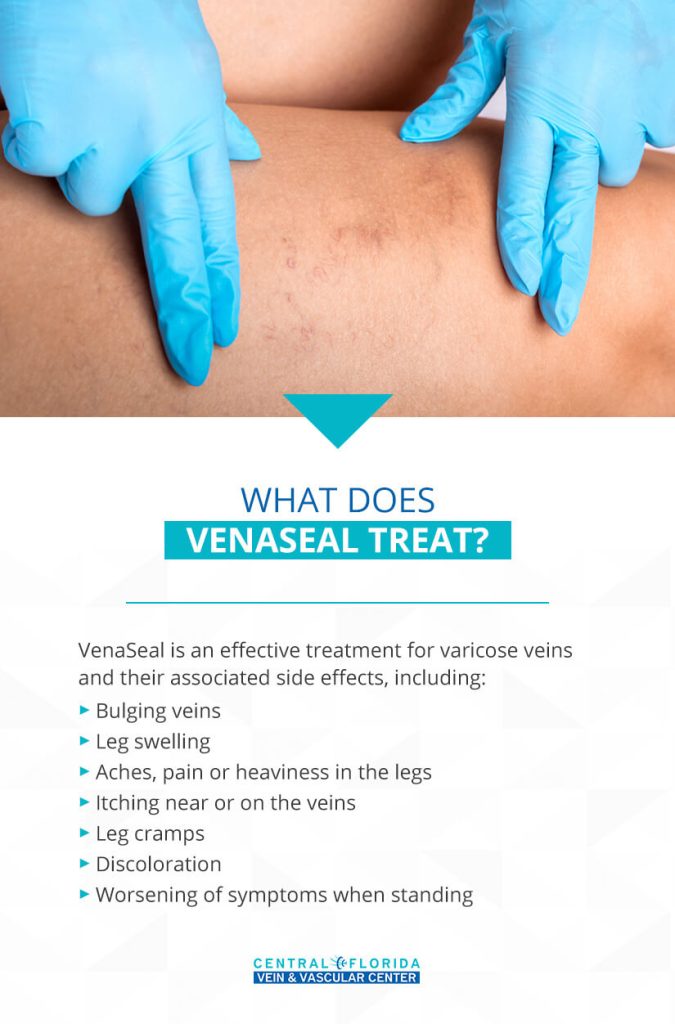
VenaSeal is an effective treatment for varicose veins and their associated side effects, including:
Your body may develop varicose veins in response to vein wall or valve damage or as a result of general weakening in those areas. You’re more at risk for developing this condition if you have ever been pregnant, live a sedentary lifestyle, have a family history of varicose veins, are overweight, or have a history of deep vein thrombosis.
At the Central Florida Vein and Vascular Center, your diagnosis begins with a conversation. Your doctor will take a thorough history to determine how likely your symptoms are to be related to venous insufficiency. Your physician will perform a physical examination to further solidify your diagnosis and assess how suitable you are for treatment. They will note things like appearance and any specific symptoms you experience, including the time of day you experience them. They will ask about your family history, previous issues with veins or blood flow, your medical history, your activity level, and other questions about your overall lifestyle. They will likely perform a thorough reflux venous ultrasound to observe the current state of your vein systems before recommending VenaSeal treatment or an alternative.
The VenaSeal closure system procedure begins with a medical professional inserting the catheter into the vein that they locate via ultrasound. Your provider will access the vein through a small insertion spot on your leg. They will then apply pressure to the location after administering the glue to bring the vein walls together and create the seal. The catheter is then removed after the entire vein has been sealed and a small butterfly strip is applied to the access site. You will experience virtually no pain and you will be able to walk out on your own.
Your provider will discuss what you can expect during the procedure, but general information includes:
Sensation during the procedure: Your provider will guide and position the catheter to specific locations to apply small amounts of glue to the vein. Once the glue is delivered to a vein segment, pressure is applied for up to three minutes. In most cases, this pressure is the most discomfort you will feel. Your provider will provide follow-up instructions. Some patients may benefit from wearing compression socks after this treatment, but many patients do not require this step.
Venaseal represents the latest technology in Minimally Invasive Vein Therapy. While we have several options to achieve great results, Venaseal has some unique advantages and disadvantages.
The pros of VenaSeal include:
The cons of VenaSeal therapy include:
Allergic reactions: Some patients may be allergic to the cyanoacrylate adhesive. Your provider will take all the necessary steps to screen for this risk and take precautions. Some patients are not candidates for the procedure.
Possibility of inflammation: The treatment area may experience some irritation and inflammation that could result in temporary numbness.
Living with varicose veins can impact everyday activities. Many patients seek treatment to alleviate pain, but there are cosmetic benefits as well. VenaSeal is a successful treatment for addressing these concerns, but we understand that you may still have some questions regarding the procedure or potential side effects. Below are some of the most common questions about VenaSeal to determine if this treatment option could be suitable for you.

VenaSeal complications are rare, and professionals recognize the procedure as effective and safe for suitable candidates. Every procedure has some potential risks. Most complications arise from allergic responses and hypersensitivity, but test patching can provide useful information about potential allergens.
The minimal pain, if any, is one of the most significant benefits of this treatment. The treatment process eliminates the risk of inflammation and side effects from the heat of lasers, creating a safer way of addressing vein concerns. This treatment does not generally require a post-procedure treatment plan, reducing the likelihood of complications.
The medical adhesive for this procedure uses cyanoacrylate, a well-known substance among vein specialists, dental hygienists, orthopedists and other medical industry professionals. Cyanoacrylates are fast-acting and strong, offering a simple, pain-free experience.
Modern technologies and smaller instrumentations offer less invasive options, and imaging improvements and higher definition machines empower providers to better access and treat affected areas. Although VeneSeal isn’t generally associated with side effects, there are potential risks with any treatment. Some individuals may experience:
Allergic reactions: Patients can have an allergic reaction to the medication for this procedure. Only a small percentage of patients experience this reaction, but they may need one or more steroid courses to address the concern.
Other possibilities: Other possible effects of VenaSeal could include inflammation around the access site, pain, infections, injury to adjacent organs and tissues, abnormal vein development, or bleeding.
Always discuss a treatment’s potential side effects or risks before undergoing the procedure. Your provider will let you know what to be aware of and how treatment may affect you. Seek medical attention immediately if you notice any problems after the procedure, such as new swelling, pain, itching or redness, and bruising that does not go away.
The VenaSeal process is relatively short. Patients don’t need to prepare for much before the procedure, and there is minimal recovery time upon completion. Before treatment, your provider will examine the vein with an ultrasound. The ultrasound will help guide the catheter to place the glue. This process can take as little as an hour or less, depending on the severity of the vein’s condition and whether you’re treating one or multiple veins.

After the procedure, you will not need to wait long before returning to normal activities. One of the most significant benefits of this treatment is the quick healing time, with many patients returning to routine on the same day or the day after the treatment.
Many patients can expect some relief almost immediately. Some symptoms may alleviate as soon as the vein begins to close as healthy blood flow restores. Some people can also experience an improvement in visual appearance in the affected area in as little as four weeks.
Veneseal medical adhesive glues your varicose veins closed to prevent blood from pooling, causing pain or discomfort. After treatment, the glue will eventually harden. Your body will then absorb it naturally. A small number of people may experience an allergic reaction if they are hypersensitive to the adhesive, but your provider will perform various tests to screen for these allergies before beginning the treatment.
VenaSeal is an effective procedure for treating varicose veins. Several studies have shown the success of VenaSeal. In one study, patients who received the treatment reported more than a 99% success rate across a 12-month period. Another study listed VenaSeal as the most likely to be ranked first for primary outcome measures. VenaSeal ranked for having the most minor post-operation pain and the lowest occurrences of adverse events.
Looking at VenaSeal before and after pictures can quickly show the success of these treatments. With some patients feeling relief almost immediately and seeing visual improvements within weeks, this procedure is a successful and effective option for those looking to address vein concerns in a convenient and safe manner.
Insurance plan coverage varies and depends on what your insurance provider deems medically necessary. Medically necessary cases are typically those that cause pain or interfere with your daily life. They generally don’t cover procedures for cosmetic purposes only.
Always contact your insurance company before seeking treatment to see what expenses they will or will not cover.
Central Florida Vein and Vascular Center is full of dedicated and highly skilled team members prepared to address your vein concerns. Our vein care facility provides the expertise and care you need to address varicose problems and find the best solutions.
Varicose veins can be an uncomfortable and painful condition — fortunately, there are options. VenaSeal therapy and vein care are more affordable than you might think. We offer a variety of services, including VenaSeal treatments, to provide the best care possible.
Our team practices a cycle of care to ensure you always have the support you need through your healing journey. When you choose Central Florida Vein and Vascular Center, you can find guidance and knowledgeable team members at every stage. From the initial phone call to the follow-up office visits, our patients can enjoy an office and team like no other. We want to help you look and feel your best by providing high-quality service and care for your needs.
At Central Florida Vein and Vascular Center, our top priorities are addressing your concerns and getting you back on your feet. We have the tools, knowledge and experience to help you heal. Contact our team to begin your path to vein care.
